
Learning and Development (LnD) is the HR function responsible for the continuous improvement of performance through training and education. There are several roles and functions within LnD that contribute to its mission in organizations. Many of these existed as early as 1916 with the inception of the Emergency Fleet Corporation during World War I. However, this post is about how anyone can do a job that, in many cases, anyone can do or learn how to do. I’m going to break them down by their common delivery methodology.
Instructional Designers
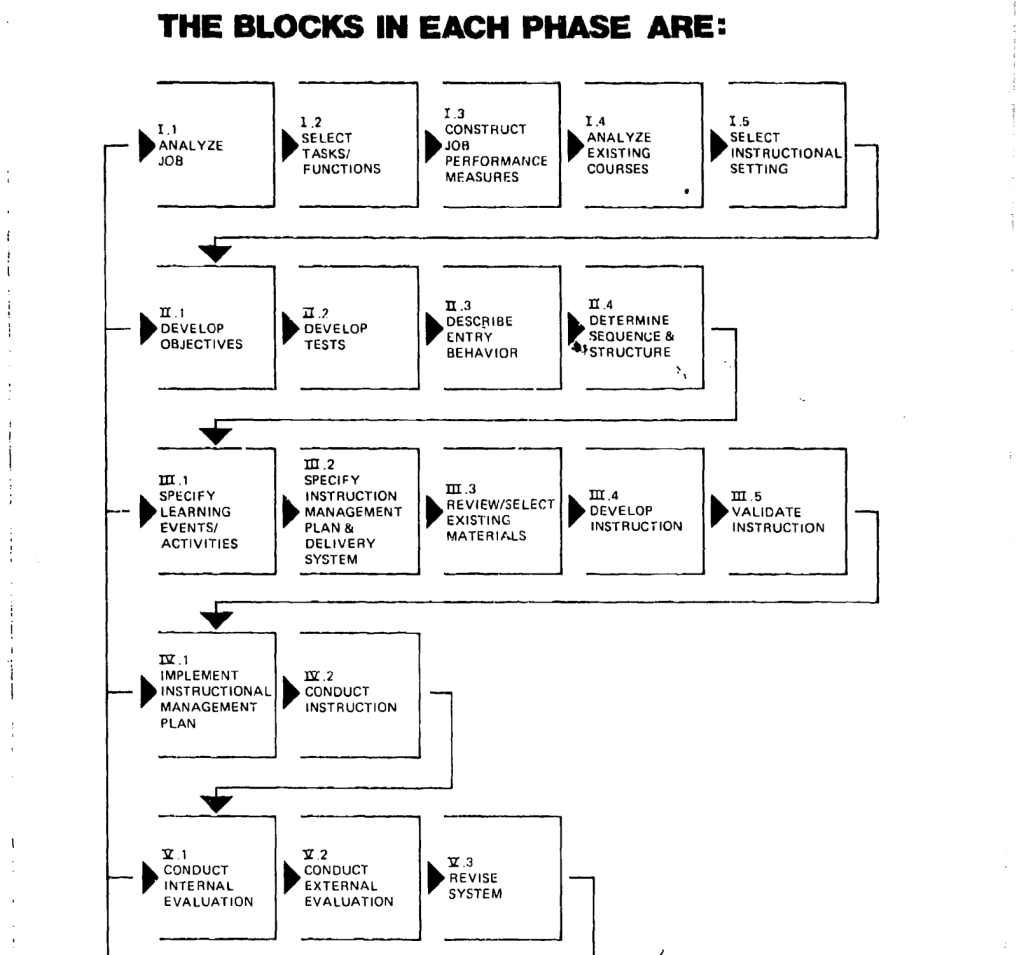
Instructional Designers (IDs) are content builders. This does not mean they do not do more but 80% of what they do is create content for learning purposes. IDs also have titles such as “Curriculum Developer, Learning Experience Designer (LXD), Instructional Systems Designer (ISD) and again, depending on the capacity of the role, and the organization; they end up mostly developing content in the form of PDFs, videos, websites, interactive eLearning modules, manuals, etc. Since COVID, IDs have customer education roles for edtech firms and they are now heavily used in higher ed as well. The skill set demand for IDs is often high because IDs are expected to perform the full ISD process or parts of it on every project. The original ISD process is known as the Analysis, Design, Development, Implementation, and Evaluation (ADDIE) process which was originally adopted in the Interservice Procedures for Instructional Systems Development or IPISD model for the U.S. Army by Dr. Robert Branson at FSU from 1973-1978. Today, ID skills include but are never limited to: graphic design, video production, technical writing, creative writing, presentation design, visual design. storyboarding, project management, LMS power user, web technologies, APIs and now all of these enhanced with Ai. IDs have to think of everything (like how I thought of putting the roles in alphabetical order so the article is more accessible). It’s a rewarding field but very difficult to achieve without content creation or web experience.
Learning Facilitators
Learning facilitators aka trainers are still very much alive and kicking in the LnD world. If you ever sat down in a training presentation, you may have experienced learning facilitation. A trainer is a person that trains people to do their job, a learning facilitator is a great trainer that uses collaborative approaches during instruction. This is why a great teacher can easily transition into a learning facilitator role. Back in 1919, vocational educator, C.R. Allen called the role “Instructor” in his book The Instructor, The Man, and The Job. According to Allen, the best instructor is a worker that can teach well or “put it over”. This phrase meant, someone that knows the job and can teach it. If the person could not teach it, they remained in production. Instructors had to be high-performing workers first. Luckily, today most learning facilitators just need strong speaking, presentation, and facilitation skills.
Sales Enablement
Sales enablement is a hybrid between a coordinator and a designer. The main point is to be nimble, fluid, quick, and always ready to create sales content for account executives and all sales roles. Oddly enough, this is one of the highest paying gigs in LnD (duh, sales!).
Training Coordinators
Training coordinators are the entry-level workers in LnD. They served as executive assistant to LnD leadership, and assist all other roles where possible. Training coordinators need to be good at data manipulation, reporting, presentation design, and overall professional communication. With the onset of Ai, this role may not be around much longer but that depends on the organization.
How do you get into LnD?
There’s no clear answer but here are some helpful strategies based on job posts requirements and hiring practices I’ve seen for the last 20 years:
- The number one skill for all is interviewing. Skills are always welcome but employers have budgets and needs. A good interviewee picks up on those two needs and adjusts accordingly. Remember, the resumé is a flyer and you are the product or service. If an employer wants a blue elephant, you don’t come in an offer a purple giraffe.
- Speak the lingo, subscribe to this blog, the next post talks about the ever-changing terminology of the field
- Make a list of your current skills, what are you the strongest at and what you enjoy most doing for work i.e. presenting, designing
- Facilitators, record videos on YouTube that show your presentation skills. Keep it simple, grab a job you used to do and know well. Build a presentation, and record it. This will be helpful as evidence of your speaking skills and get you an interview (if your resume is up to par of course).
- IDs really need to showcase two things on interviews; workflow process i.e. how do you start, work, and end a project, and creative design. Build a small sample of a eLearning course using Articulate Rise and include interactive designs so you can explain the purpose of the elements chosen for learning purposes.
- Sales enablement folks need to show pragmatism, quickness and resourcefulness. There’s not much time for big theories and educational practices. This is mostly about, what sales needs when sales need it.
- Training coordinators, if you are and administrative assistant now, you will have an edge on most folks and can potentially raise your salary. If you don’t, take free Microsoft training on Office apps.
Degree vs Professional Pathway
I have two Master degrees with my first one being in Education. If you love getting a degree, go for it. Do you need it to get an LnD job? Mostly not. Some employers have already stopped asking for them, and the majority are asking for an undergraduate degree in pretty much anything related to education. I would say that today, I would not pursue a degree. Most higher ed programs in the U.S. are basic and you are just going to be writing papers and learning fancy theories that no one will care about on your first day at work. My only caution to you is to get a degree that would actually get you applicable and observable skills. The best programs for LnD are Industrial Psychology and anything psychology. Stay away from Education programs and especially Teaching programs because they do not address workplace learning. If you already have a degree, I would recommend becoming an Associate Professional of Talent Development (APTD) so you can learn the basics of lingo and operations. Just know these certifications have no value to employers that are not aware of them.
Other Roles Ommitted
Learning Architect, Learning Advisor or Partner are senior roles and therefore not included. Then again, once you get in the industry, you will see folks with a Bachelor of Arts in Poetry and no other education with Manager and above titles. An LnD manager can be an individual contributor with a high salary doing everything or someone in a leadership role leading teams.
Wrap Up
In summary, getting into LnD can be very easy if you play the right game but it can be very tricky too. You have people that design and deliver presentations, facilitate learning, support programs by creating content, support and coordinate teams, and support sales teams specifically. The easiest way to get into LnD is by networking and creating content. Education degrees are not worth the time and money but if you love going to school, do it. Finally, LnD roles vary immeasurably depending on the role and organizational need and the conventional ways of getting into this profession no longer apply.